

I blew through €180,000 in grant money, angel checks, and one very ill-advised personal loan in under three years, and when the well ran dry in 2024, I nearly shut the whole thing down. Not because the business was bad. Because I had built a funding strategy with exactly one leg to stand on. One investor pulled out. One grant cycle closed. And suddenly I was the proud owner of a company that couldn't make payroll.
That's the trap nobody warns you about. Founders treat fundraising like a single event—you raise a round, you survive, you raise again. But the founders who actually last are the ones who stack multiple funding sources so no single dry-up kills them.
Here's what I learned the hard way, and what I'd do differently from day one in 2026.
Key Takeaways
- Diversifying funding means stacking non-dilutive, dilutive, and revenue-based sources so no single failure sinks you.
- Most founders over-index on venture capital when grants, revenue-based financing, and crowdfunding can cover the same gap without giving up equity.
- Match the funding source to your stage and growth rate, not to what sounds impressive at a dinner party.
- Build a 12-month funding calendar, not a one-time raise.
- Revenue-based financing works brilliantly for predictable cash flow and terribly for lumpy sales.
- The best time to line up your next source is while the current one is still healthy.
Why a single funding source is a slow-motion disaster
When I raised my first angel round in 2022, I felt invincible. Two investors, €120,000, and a runway I calculated at 18 months. I gave myself a mental high-five and went back to building.
Fourteen months later, one of those investors got hit by a liquidity crunch in his own portfolio and stopped honoring his follow-on commitment. The other one wanted to renegotiate terms I'd already spent. I had maybe six weeks of cash and no plan B.
Sound familiar? Almost every founder I talk to has a version of this story.
The core problem is that founders treat funding as a pipeline with one entrance. You walk in with a pitch deck, you walk out with money, you repeat. But a funding source isn't a faucet—it's a relationship with its own lifecycle, its own risk profile, and its own failure modes.
The three funding families you need to understand
Every funding source on the planet falls into one of three buckets, and each behaves completely differently when things go wrong:
- Dilutive — equity, angel rounds, VC. You trade ownership for cash. Great when you're growing fast, brutal when you're not.
- Non-dilutive — grants, subsidies, tax credits, competitions. Free money, but slow, bureaucratic, and rarely enough on its own.
- Repayable — revenue-based financing, bank debt, equipment leases. You keep your equity, but you owe the money back whether or not the business works.
Most founders pick one bucket and stick to it. The ones who survive stack all three.
What diversification actually buys you
It's not just about spreading risk. It's about negotiating leverage. When I finally had a grant covering my R&D and a revenue-based facility covering my working capital, I walked into my next investor meeting with something I'd never had before: the ability to say no. That changes the entire conversation.
You can read more about how valuation shifts when you have options in this founder's guide to startup valuation.
Non-dilutive money: grants, subsidies, and competitions
I ignored grants for my first two years because I assumed they were for biotech labs and university spinouts. Wrong. In 2026 there are hundreds of programs across Europe, North America, and Asia aimed squarely at early-stage software, climate, and deep-tech companies.
The catch? They're slow. My first successful grant took seven months from application to cash in the bank. That's an eternity if you're burning runway.
Where to actually find grants that aren't a waste of time
Skip the aggregator sites that list 4,000 opportunities. Instead:
- Start with your national innovation agency and regional development funds—they're the least competitive relative to their budget.
- Look at industry-specific programs tied to your sector (climate, health, defense, agritech).
- Apply to pitch competitions, but only ones that pay cash, not "exposure."
- Check R&D tax credits—they're not grants but they're essentially free money for technical work you're already doing.
One insider tip: talk to a grant consultant before you write a single word. I wasted three weeks on an application that was dead on arrival because I didn't understand the eligibility scoring. A €400 consultation would have saved me the month.
The hidden cost of grants
Nothing is free. Grants come with reporting requirements, audit trails, and restrictions on how you spend the money. I once had a grant that wouldn't let me use the funds for marketing—only product development. That's fine if you need product development. It's useless if you need customers.
Treat grants as a strategic supplement, not your primary fuel.
Revenue-based financing and debt: the middle path
Revenue-based financing (RBF) is the most underrated tool in the founder toolkit, and it's finally mainstream in 2026. The model is simple: an investor gives you capital, and you repay it as a percentage of monthly revenue until you hit a cap.
I used RBF in early 2025 to cover a €60,000 inventory gap. No equity given up. No board seat. No personal guarantee. I repaid it over 14 months.
When RBF works—and when it destroys you
RBF shines when your revenue is predictable and recurring. SaaS, subscription boxes, service retainers. It's a disaster when your sales are lumpy or seasonal, because you still owe payments in the dry months.
Compare the main options side by side:
| Source | Equity given up | Speed | Best for |
|---|---|---|---|
| Venture capital | 15–25% | 3–6 months | High-growth, winner-take-most markets |
| Revenue-based financing | 0% | 2–6 weeks | Predictable recurring revenue |
| Grants | 0% | 4–9 months | R&D, deep tech, climate |
| Crowdfunding | 0% (rewards) or equity | 2–4 months | Consumer products, communities |
| Bank debt | 0% | 1–3 months | Asset purchase, working capital |
Bank debt is worth a mention too, especially since 2026 lending conditions have loosened for small businesses with two years of clean books. If you have assets, a term loan is often cheaper than anything else on this list.
Crowdfunding and community capital
Crowdfunding gets dismissed as a gimmick by founders who've never tried it. That's a mistake. It's not just money—it's a customer list, a validation signal, and a marketing engine rolled into one campaign.
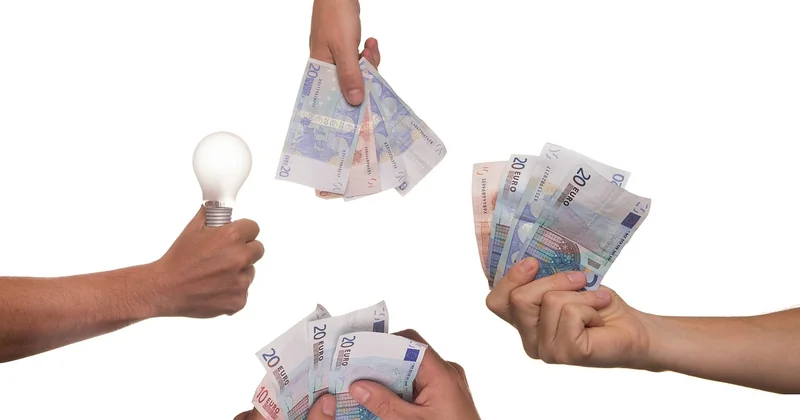
My second campaign raised $127,000 in 14 days. My first raised $3,247. The difference was preparation, not luck. If you want the playbook, these crowdfunding tips for new entrepreneurs cover the groundwork most people skip.
Equity crowdfunding vs rewards crowdfunding
Rewards crowdfunding is simpler: backers get a product, you get cash. Equity crowdfunding is more regulated but lets you raise larger amounts from a crowd of small investors who become advocates.
Pick rewards if you have a physical product or a consumer app. Pick equity if you have a B2B business and a strong narrative—and you're comfortable with the disclosure requirements.
Equity and VC: when it actually makes sense
Here's my unpopular opinion: most startups shouldn't raise venture capital. VC is built for a specific kind of business—one that can plausibly return 10x or 100x, in a market big enough to justify it.
If you're running a profitable agency, a niche SaaS, or a services business, VC will push you toward growth you don't need and an exit you don't want.
Venture capital vs bootstrapping: the real trade-off
Bootstrapping gives you control, patience, and full ownership of the upside. VC gives you speed, network, and a partner who's often genuinely useful. Neither is better—they're just different games.
The mistake is raising VC because it feels like the "real" thing to do. I've watched founders take a €2M round for a business that would have been happier and more profitable at €400K of revenue with no investors.
If you do go the equity route, understand exactly what you're giving up. Our guide on different types of business funding options walks through the equity math in plain language.
Building your 12-month funding calendar
Diversification isn't a one-time decision. It's an ongoing process. Here's the system I now use, and it's saved my business twice.

The quarterly funding review
Every quarter, I spend half a day mapping out:
- How much runway I have right now (in weeks, not months—it's more honest).
- Which funding sources are currently active and which are drying up.
- What the next source should be, and how long it takes to activate.
- Any regulatory or market changes that affect my options.
The rule I follow: start the next funding process when you still have six months of runway. Not three. Not one. Six. Because grants take seven months, VC takes four, and RBF takes six weeks but needs a clean revenue history.
Avoiding the classic mistakes
Three things I've done wrong, so you don't have to:
- Raising on a deadline. You always get worse terms when you're desperate.
- Assuming a verbal commitment is money. It isn't until it's in the bank.
- Spending grant money on things the grant doesn't allow, then having to give it back. Yes, this happened.
Build your calendar, protect your runway, and never let a single source become your lifeline.
The funding mix is the strategy
Diversifying your startup funding isn't a defensive move. It's an offensive one. When you have multiple sources lined up, you negotiate from strength, you survive shocks that would kill a single-source competitor, and you keep ownership of the thing you actually built.
Your next action, right now: open a spreadsheet and list every funding source you've used in the last 18 months. Then list three you haven't tried that fit your stage. Pick one. Start the application, the conversation, or the campaign this week—before you need it.
Because the founders who make it aren't the ones who raise the biggest round. They're the ones who never have to stop building.
Frequently Asked Questions
How many funding sources should a startup have?
There's no magic number, but I aim for at least two active sources and one in the pipeline at all times. If you're pre-revenue, that might be a grant plus a competition. If you're post-revenue, it might be RBF plus a small angel round. The point is to never have a single point of failure.
Is revenue-based financing better than venture capital?
It depends entirely on your business model. RBF is better if your revenue is predictable and you want to keep your equity. VC is better if you're in a winner-take-most market where speed matters more than ownership. For most small businesses, RBF wins. For high-growth tech, VC usually makes more sense.
Can I combine grants with venture capital?
Yes, and you should. Grants are non-dilutive, so they don't conflict with equity rounds as long as you disclose them properly to investors. Just watch out for grant restrictions—some programs limit how much outside equity you can raise while receiving their funds.
How long does it take to diversify startup funding sources?
Expect 6–12 months to build a genuinely diversified funding base. Grants take 4–9 months to land, VC rounds take 3–6 months, and RBF can close in weeks but needs a revenue history. Start early, and don't wait until you're desperate.
What's the biggest mistake founders make with funding?
Relying on a single source and treating fundraising as a one-time event instead of an ongoing process. I made this mistake and nearly lost my company. Build a quarterly funding review, keep multiple options warm, and always start the next raise before you actually need the money.


